
"Ecuadorian espresso"
300 article(s) found

Introduction to the taste of the method of variety treatment in the grinding scale of Ecuadorian coffee beans
Ecuador is one of the few countries in South America that produces both Arabica coffee and Robbins coffee. However, as the land suitable for Arabica coffee trees is decreasing, the production of Robbins coffee is gradually increasing. The best Arabica coffee comes from the Andes, especially the Chanchagu Valley (ChanchamgoValley), which is divided into two mountains, from the south to the south.

Introduction to the flavor and taste characteristics of Ecuadorian coffee manor with balanced low acidity
When it comes to Ecuadorian coffee, we have to mention the organic coffee in the Galapagos Islands of Ecuador. The Galapagos Islands, a famous tourist attraction, has been declared a World Natural Heritage site by the United Nations Educational, Scientific and Cultural Organization (UNESCO). It is extremely rich in products, and organic coffee is one of the unique ones. The local fertile volcanic soil, micro-climate and other unique ecological environment, coupled with its lack of

Introduction to the coffee flavor and taste of Santa Cruz Manor in Ecuador with a hint of flowers and fruits.
St. Cristobal is a larger island in the Galapagos archipelago. At 410m above sea level, there is a small lake called El.Junco, which forms streams along the rocks and volcanic rocks on the southern slope of the island. Mineral-rich fresh water moistens the land of St. Cristobal, keeping the soil moist and fertile. For here.

Introduction to Santa Cruz Manor in St. Cristobal, a somewhat sour and bitter Ecuadorian coffee producing area
Ecuador is at the center of the world, which is why Ecuador is called the equatorial country. Ecuador's top coffee is also famous for its superior geographical location. A two-hour drive east from Quito, the capital of Ecuador, you can reach the tropical jungle and west to the seaside. Ecuador is one of the most species-rich countries in the world. You are in any direction
Unique aroma of Ecuadorian coffee plantations Galapagos coffee cultivation climate altitude profile
In 1875, 340 years after Frei Thomas de Berlanga discovered the island, an indigenous man named Cobos arrived on San Cristobal Island, where he established the Hassenda Coffee Plantation and planted about 100 hectares of Arabic bourbon trees. Because the plantation is located between 140 meters and 275 meters above sea level, the climate is equivalent to the climate between 915 meters and 1830 meters inland.

Ecuadorian Coffee with Special aroma Manor introduces Galapagos Coffee
The Republic of Ecuador is located in northwestern South America. It is bordered by Colombia in the northeast, Peru in the southeast and the Pacific Ocean in the west. It covers an area of 256370 square kilometers and the coastline is about 930km long. The equator runs through the north of the border, and Ecuador means the central mountain of the Spanish equator: after Colombia entered Ecuador, the Andes is divided into the East and West Cordillera Mountains.

Strong taste of Ecuadorian coffee manor flavor and taste characteristics of boutique coffee
The national emblem of Ecuador was launched in 1900, which is similar to the national emblem of Colombia. A ferocious American condor vulture spreads its wings above the national emblem. It is the national bird of Ecuador, symbolizing sovereignty and independence. The design of Ecuador's national emblem is unique, which fully shows the amorous feelings of the country: Mount Chimborazo, Ecuador's highest peak, is covered with snow and stands towering against the blue sky.

Introduction to the regional treatment of coffee bean varieties in Santa Cruz Manor, Ecuador
For coffee, the most important thing is to understand the soil and altitude in which it grows will have a significant impact on the quality of coffee products. Alpine coffee from Ecuador is produced at an altitude of about 1000-2000 meters. Coffee from different soils has different tastes. Its taste is very interesting, a little sour and bitter, coupled with aromas and sweetness of fruit, grass and chocolate, for making ES

A slightly sweet and floral Ecuadorian coffee estate with a variety of flavors
In the mid-15th century, among fishermen fishing in the Pacific Ocean off western South America, there were legends of magical islands. It is said that the islands can sometimes be clearly seen from a distance, but disappear as the ship approaches; sometimes they look like a galleon, sometimes they take on the shape of a witch. Fishermen call these islands the enchanted islands, thinking they're

Introduction to Galapagos Coffee with unique aroma of Ecuadorian Coffee Manor
West coast: including coastal plains and foothills, high in the east and low in the west, generally below 200 meters above sea level, with some hills and low mountains at an altitude of 600 to 700 meters. Belongs to the tropical rain forest climate, the southernmost end begins to transition to the savanna climate. The average annual precipitation decreases from more than 3000 mm to about 500mm from north to south. Central Mountains: the Andes enter Ecuador from Colombia

Very good taste Ecuadorian coffee estate production area Flavor Features Introduction Santa Cruz estate
At the same time, it has a strong aroma and a long aftertaste. Best of all, Kona coffee has a blend of wine, fruit and spice aromas that are as charming as the colorful hues of this volcanic archipelago. Brazilian Coffee Brazil is the world's largest coffee producer, accounting for nearly 30% of the world's total production. Brazilian coffee

A brief introduction to the description of the flavor and aroma characteristics of Ecuador's boutique coffee beans with fresh taste
In addition, creative coffee made from Ecuadorian coffee beans with unique flavor is also popular with consumers. In 2014, Mr. Veniso, the champion of Ecuador Coffee Competition, won the first place in Ecuador Coffee Competition with creative formula. One espresso with mint grass from the Amazon region tastes fresh and unique, while the other adds

Ecuadorian coffee producing countries, which mainly produce robusta coffee, introduce fine coffee beans.
Ghana Pagos coffee is produced at an average altitude of 300 meters above sea level. It has different tastes, it is not so sour and bitter, it tastes very good, it is mild, it tastes slightly sweet and floral, and it is very easy to taste. It is a very good choice for guests who are just starting to drink coffee. For drip-filtered coffee that wants to make and taste pure aroma and taste, I recommend you try Ghana

Flavor description of high-quality coffee beans in Ecuador introduction to the production area of grinding scale
Ecuador is one of the few countries in South America that produces both Arabica coffee and Robbins coffee. However, as the land suitable for Arabica coffee trees is decreasing, the production of Robbins coffee is gradually increasing. The best Arabica coffee comes from the Andes, especially the Chanchagu Valley (ChanchamgoValley), which is divided into two mountains from the south.

Ecuador Coffee Estate Features Fine Coffee Bean Flavor Taste Galapagos Coffee
Ganapagos coffee is grown at an average altitude of 300 meters. It has different tastes. It is not so sour and bitter. It tastes very good. It is mild, slightly sweet and has flowers. It is very easy to drink. It is a very good choice for customers who are just drinking coffee. For making and tasting drip coffee with pure aroma and taste, I recommend you try Ghana

Introduction to San Pedro Manor with the characteristics of Ecuadorian Coffee Flavor Manor
For coffee, the most important thing is to understand the soil and altitude in which it grows will have a significant impact on the quality of coffee products. Alpine coffee from Ecuador is produced at an altitude of about 1000-2000 meters. Coffee from different soils has different tastes. Its taste is very interesting, a little sour and bitter, coupled with aromas and sweetness of fruit, grass and chocolate, for making ES

A brief introduction to the flavor, taste and aroma characteristics of Ecuadorian boutique coffee beans with balanced and refreshing taste
Ecuadorian coffee has distinctive South American coffee characteristics. The fragrance is soft, as if you can go back to the ancient and mysterious Inca empire. Coffee is a good history, you need to savor it carefully in order to understand the vicissitudes of life. Balanced with low acidity and rich aroma. The bitter taste is not obvious, the taste is clear, but there is a lingering aftertaste for a long time. Excellent

Description of the flavor, taste and aroma characteristics of boutique coffee beans in the Equatorial country of Ecuador Coffee Hassanda Manor
In 1978, the Galapagos Islands were declared a World Heritage site by the United Nations Educational, Scientific and Cultural Organization. The archipelago is called a living museum of biological evolution and a melting pot of marine life, and Darwin's theory of evolution was inspired by the Galapagos Islands. Most countries in the world produce only one kind of coffee beans, while Ecuador is one of the few countries in the world that can produce Arabica coffee beans at the same time.
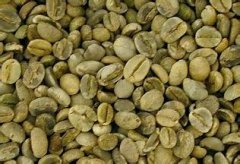
A brief introduction to the history and culture of the origin and development of balanced and refreshing Ecuadorian boutique coffee beans
Galapagos Islands coffee is recognized as green natural coffee, because the Ecuadorian government has designated the islands as a national park, not only does it no longer allow the reclamation of new agricultural land, but also forbids the use of chemical fertilizers, pesticides, herbicides and other chemicals. Although the elevation of about 200m on the island is very low, the climate of this area is equivalent to terrestrial 1000m1800m due to the special influence of the sea.

A brief introduction to the Origin, Development, History and Culture of fragrant Ecuadorian Fine Coffee beans
When it comes to Ecuadorian coffee, we have to mention Ecuadorian organic coffee in the Galapagos Islands. The Galapagos Islands is a famous tourist attraction, declared as a World Natural Heritage site by the United Nations Educational, Scientific and Cultural Organization (UNESCO). It is extremely rich in products, and organic coffee is a unique one of them. The local fertile volcanic soil, microclimate and other unique ecological environment